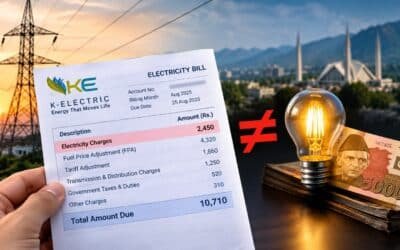




The primary goal is to eliminate "slab-benefit" distortions where wealthy households in small apartments or those with solar panels currently qualify for low-income "protected" status.
The one price increase that Taylor did not mention was preceded by electricity price reductions.
On the other hand, I have had four electricity price increases totalling $1,513pa (reduced to $1,200pa by shopping around) since October 2022
Evidently more increases this year, too. pic.twitter.com/4qiENNFRGW— Catriona Thoolen 🐱 (@cat240359) February 21, 2026
How the New System Will Work
The transition is expected to be finalized by January 2027, with the first progress report due to be shared with the visiting IMF mission on February 26, 2026.
- Uniform Tariffs: All domestic consumers will eventually be charged a uniform national average tariff, regardless of how many units they consume.
- Targeted Cash Support: Instead of a reduced bill, low-income families will receive direct financial compensation through the Benazir Income Support Programme (BISP).
- Income Quantiles: Consumers will be categorized into four groups (Q1 to Q4) based on verified income data from the National Socio-Economic Registry (NSER).
- Ending "Protected" Status: Current categories like Lifeline (up to 50 units) and Protected (up to 200 units) will be phased out as the subsidy shifts from the utility bill to the consumer's bank account.
Why the Change? (The Data Gap)
Authorities argue that the current consumption-based system has become "inequitable":
- The "Solar" Loophole: Wealthy households with rooftop solar often record very low grid consumption, inadvertently qualifying them as "protected" consumers meant for the poor.
- Inflation of Subsidy: The number of "protected" consumers has reportedly surged from 9 million to 22 million in just a few years, placing an unsustainable burden of Rs. 614 billion in annual subsidies on the state.
Immediate 2026 Measures: New Fixed Charges
To stabilize the sector while the income-based model is built, the government has already implemented a revised Schedule of Tariff (SoT) as of February 7, 2026:
| Consumption Category | New Monthly Fixed Charge |
| Up to 100 Units (Protected) | Rs. 200 |
| 101–200 Units (Protected) | Rs. 300 |
| 101–200 Units (Non-Protected) | Rs. 275 |
| 201–300 Units | Rs. 350 |
| 301–400 Units | Rs. 400 |
| Above 500 Units | Rs. 675 |
Note: These fixed charges aim to raise Rs. 125 billion to fund a Rs. 4.04 per unit relief for the industrial sector, shifting the cross-subsidy burden away from businesses and onto domestic consumers.
You May Also Like: PSX Suffers Historic Single-Day Crash, Market Meltdown
Impact on Households
Analysts warn that while this move satisfies IMF conditions and helps curb circular debt (which dropped to Rs. 3.93 trillion in FY2025), it could lead to an effective bill increase of up to 76% for middle-income households using 100–300 units per month
Check out our latest video: