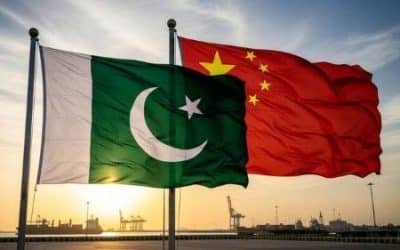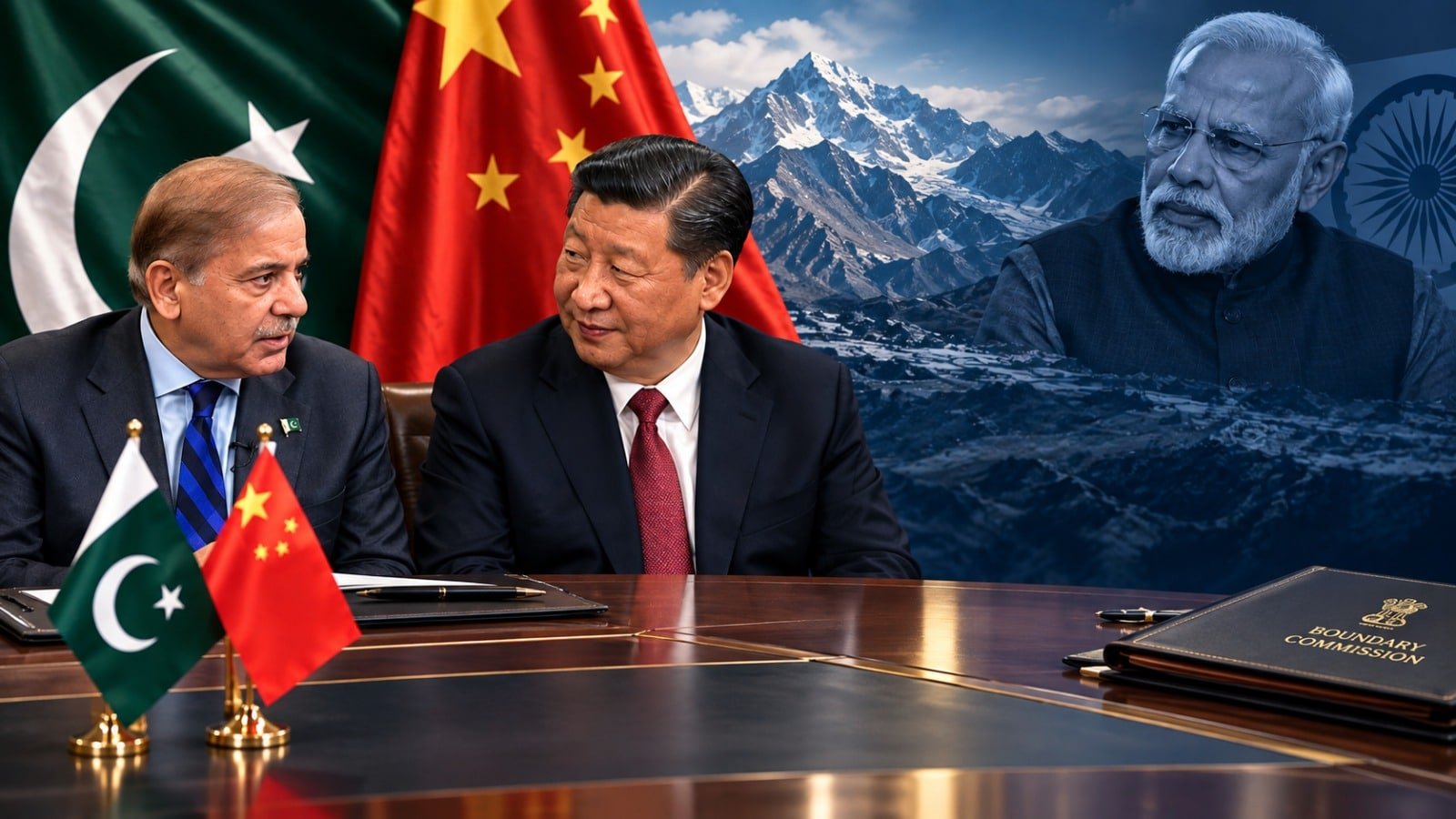



Officials from Pakistan and China met in Islamabad on September 16 and 17 to do something that had been planned for more than ten years. The Pakistan-China Boundary Joint Commission was established, which was written into a 2013 agreement but never used. The meeting was followed by the signing of minutes and the release of a joint statement on a strategic partnership, but India immediately raised strong objections within hours. In Pakistan, most of the news ended with the press release. The article discusses the purpose of the commission in more detail, the timing of its establishment, and its implications for trade, security, and the nearly 600-kilometer border the two countries share.
Key Highlights
- The inaugural meeting of the Pakistan-China Boundary Joint Commission (BJC) was held at the Ministry of Foreign Affairs in Islamabad on September 16 and 17, 2026.
- The commission was created under Article 45 of the 2013 Agreement on the Boundary Management System, signed when Chinese Premier Li Keqiang visited Islamabad, but it had never held a meeting until now.
- Pakistan’s delegation was led by Director General (China) Bilal Mahmood Chaudhary. China’s side was led by Li Ya, Deputy Director General of the Department of Boundary and Ocean Affairs.
- The BJC will handle boundary maintenance, joint surveys, boundary marker disputes, cross-border facility management, and incident response along the Pakistan-China border.
- India rejected the commission, arguing it has no legal basis over territory it claims as part of Jammu and Kashmir. Pakistan’s Foreign Office dismissed the objection and defended the 1963 Sino-Pak Boundary Agreement.
- The activation gives both countries a standing channel for coordination at the Khunjerab Pass, the only road link between Pakistan and China and a key artery for CPEC trade.
Pakistan and China launch Boundary Joint Commission to streamline CPEC trade pic.twitter.com/pVIfpLAgtq
— Pakistan TV Digital (@PakistanTVcom) September 17, 2026
What Happened This Week
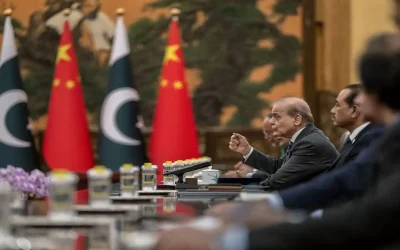
Foreign ministries rarely make headlines two days in a row for the same meeting, but this one earned it. The Pakistan-China Boundary Joint Commission held its first-ever session in Islamabad on Wednesday and Thursday. By the time it wrapped up, both governments had signed the minutes of the meeting and issued near-identical statements calling it a milestone for their All-Weather Strategic Cooperative Partnership.
That phrase gets used a lot in Pakistan-China statements. This time it had some substance behind it. The commission is not a new idea dressed up for the cameras. It is a mechanism that has existed on paper since 2013 and simply never met. Activating it now, after 13 years, tells you something about timing, and we will get to that.
There were more than diplomats at the meeting. Both countries’ foreign, defense, interior, commerce and communications ministries took part, along with customs officers, surveyors and other groups that deal with the border on a daily basis. The guest list is important. A boundary commission made up entirely of foreign ministry people can discuss treaties and maps. Customs, Commerce and Interior Ministries can all work together on one to move goods, people and enforcement decisions.
Where the Commission Comes From
To understand why this matters, you need to go back to 2013. That year, then-Chinese Premier Li Keqiang visited Islamabad, and the two countries signed the Agreement on the Boundary Management System. Article 45 of that agreement laid out a plan: set up a joint commission to oversee how the border is actually managed day to day.
That clause sat unused for more than 10 years. There remained ad hoc channels, working groups for specific projects, and the larger China-Pakistan Economic Corridor system that Pakistan and China used to deal with border issues. No one agency was responsible for the management of the border, including its demarcation, the resolution of disputes over demarcation, the management of the line, and the coordination of cross-border movement.
The 2013 deal was an extension of a prior one. The actual border between Pakistan and China was created by the Sino-Pakistan Boundary Agreement of 1963. This treaty established the line passing through the Karakoram range, including the area near Shaksgam Valley. That’s what the law has said about the border for more than six decades. The 2013 deal changed nothing. It provided the means to maintain the line that had been laid down in 1963.
What the Commission Actually Does
This is the part most reports skipped. A “boundary joint commission” sounds vague until you see the actual list of jobs it has been given.
According to the Foreign Office and reporting from the meeting, the commission’s job covers:
- Maintenance and inspection of the boundary. Someone has to physically check boundary markers, monitor erosion or terrain shifts in a mountain border, and keep records current. That job now sits with the BJC.
- Joint surveys. Pakistan and China will carry out coordinated survey work along the border rather than each side working from its own maps and assumptions.
- Boundary marker issues. In a border that runs through glaciers and high-altitude terrain, markers move, get buried, or get disputed. The commission gives both sides a formal channel to sort that out instead of letting it become a diplomatic problem.
- Management of cross-border facilities. This includes the infrastructure that lets people and goods actually cross, most notably the Khunjerab Pass.
- Handling of incidents involving the border. Whether that means an accidental crossing, a security incident, or a dispute over access, there is now a standing body meant to deal with it rather than an emergency phone call between capitals.
The Foreign Office said the first meeting also covered border coordination, movement of goods and people, and people-to-people contacts. Put simply, this job is more than just drawing lines on a map. It’s about running the border as a functioning system.
Why Now
What is clear is that Pakistan and China did not pull the trigger on a mechanism they agreed to in 2013 until September 2026. Here is why:
Khunjerab has experienced a steady rise in the volume of trade thanks to improved CPEC infrastructure. And busier crossings demand less, not more, clarity. The pass, which used to handle only light seasonal trade, now has a heavier, more constant flow of goods. When the volume increases, informal coordination is not scaled down.
Second, both governments have been hinting at a bigger push to institutionalize cooperation in the CPEC era than one-off projects. Then a standing boundary commission makes sense. Border management will no longer be handled by special envoys and one-off visits but will have its own calendar, working groups, and paper trail.
Thirdly, there is some background to the area. In the past year, Pakistan has increased security and border cooperation on several fronts, from its western border to its relations with Gulf states. The formalization of the northern boundary mechanism with China closes a gap that has existed for years. This is at a time when Islamabad is generally trying to tighten up its border relations rather than leaving them open.
This need not be dramatic. Sometimes an institution is just used because the paperwork that needs to be done finally gets done.” But this is probably not happening by coincidence. CPEC is entering a phase where operational improvements matter more than new megaprojects.
The India Objection, and Why It Was Predictable
Within a day of the announcement, India’s government objected. New Delhi’s position is that no formal boundary exists between Pakistan and China in the region, because India considers Gilgit-Baltistan, and by extension the area where the Pakistan-China border runs, to be part of the disputed Jammu and Kashmir territory under Indian claim.
Pakistan’s Foreign Office pushed back hard. Spokesperson Sajjad Haider Khan called India’s objection baseless and legally untenable, and defended the 1963 Sino-Pak Boundary Agreement as a valid treaty between two sovereign states. He also turned the argument back on India, pointing to New Delhi’s August 5, 2019 move to revoke Article 370 and reorganize Jammu and Kashmir’s status, and calling it a unilateral action that violated UN Security Council resolutions on the disputed territory.
This exchange is not new territory. India has objected to Pakistan-China cooperation in this region before, going back to the original 1963 agreement itself, which India has long called invalid on the same grounds. What is different this time is that the objection landed on a functioning administrative body rather than a treaty text. India is not just disputing a historical agreement anymore. It is disputing the legitimacy of a commission that is now actively holding meetings, signing minutes, and coordinating customs and survey work.
Expect this to remain a rhetorical fight rather than an operational one. India has no practical ability to interrupt Pakistan-China border management on the ground, and both Islamabad and Beijing have made clear they consider the matter settled from their side.
What This Means for Trade and Border Management
For now, don’t worry about being diplomatic. For businesses, transporters and all others concerned with CPEC, the more relevant question is whether this makes any difference to the movement of people and goods through the Khunjerab Pass.
Yes, honestly, yes it should, but not right away. Now there is a standing commission with working groups on customs, trade, and border management that gives the two sides a structured way of working through problems that used to have to be taken to the level of the foreign ministry. Examples include different rules regarding paperwork required, disagreements over seasonal closures, or disagreements over survey data near the crossing point. These are precisely the kind of problems the BJC is now supposed to address.
For Pakistani exporters and importers using the China route, it is unlikely to see it for a while. Things like this, as an institution, tend to result in less disagreement and more coordination over time, not immediate changes to customs procedures. But, interestingly, people from the customs and commerce ministry sat at the same table with boundary surveyors. It does not appear that Pakistan and China regard the management of their physical borders and the facilitation of trade as two issues that occasionally intersect; rather, the two appear to be two sides of the same coin.
There is also a security angle. A formal channel for handling “incidents involving the border” gives both countries a pre-agreed process rather than an improvised response if something goes wrong at the frontier, whether that is a natural disaster affecting the pass, a security incident, or a dispute over an unmarked section of the boundary.
What Comes Next
At the first meeting, signed minutes were produced and a plan for how to work together in the future, but there was no public schedule for future meetings. The BJC will likely form working-level groups that meet more frequently than the full commission to address specific issues, such as survey coordination or customs procedures, similar to the two-way systems that have been in place between Pakistan and China.
Watch for three things over the next few months: will the BJC be mentioned by Pakistan’s Ministry of Commerce when it talks about Khunjerab trade volumes; will joint survey work in the border area be announced; and will India’s objections go beyond what its foreign ministry says. Nothing like that has happened so far. This is more likely to become a quiet, technical body that doesn’t make news much, which is usually a sign that a boundary mechanism is doing what it is supposed to do.
FAQs
What is the Pakistan-China Boundary Joint Commission?
The Pakistan-China Boundary Joint Commission (BJC) is a bilateral mechanism created to manage the Pakistan-China border. Established under the 2013 Agreement on the Boundary Management System, it met for the first time in Islamabad on 16-17 September 2026.
When was the Pakistan-China Boundary Joint Commission activated?
The commission was formally constituted at its first meeting held at the Ministry of Foreign Affairs, Islamabad, Pakistan, on 16 and 17 September 2026.
Who led the Pakistan and China delegations at the meeting?
The Pakistan delegation was headed by Bilal Mahmood Chaudhary, Director General (China) at the Ministry of Foreign Affairs. The Chinese delegation was headed by Li Ya, Deputy Director General, Department of Boundary and Ocean Affairs.
What does the Pakistan-China Boundary Joint Commission do?
It is responsible for the management of cross-border facilities such as Khunjerab Pass, handling of incidents along the border, boundary marker disputes, joint border surveys, and boundary maintenance and inspection.
What is the legal basis for the Pakistan-China border?
The border is based on the 1963 Sino-Pakistan Boundary Agreement, which demarcated the boundary line through the Karakoram region. The 2013 Boundary Management System Agreement built on the treaty by establishing a joint commission to oversee it.
Why did India object to the Pakistan-China Boundary Joint Commission?
India says the commission has no legal basis because it claims the border region as part of Jammu and Kashmir, territory India considers disputed and under its own claim. Pakistan’s Foreign Office rejected this objection and defended the 1963 boundary agreement as valid between two sovereign states.
How does the Boundary Joint Commission affect the Khunjerab Pass and CPEC trade?
The commission will be better able to coordinate management of cross-border facilities, customs procedures, and survey work at Khunjerab Pass, the main road link for trade between Pakistan and China under the China-Pakistan Economic Corridor. Change will not be instant and procedural, but gradual and through more efficient dispute resolution.
Is the Pakistan-China Boundary Joint Commission a new agreement?
No. It does not draw a new boundary or create any new treaty. It triggers a mechanism that had been set out in the 2013 Agreement on the Boundary Management System, but which had not been convened until September 2026.
You May Like To Read: The Indus Waters Treaty Fight Pakistan Is Actually Losing: It’s Not With India, It’s With Itself