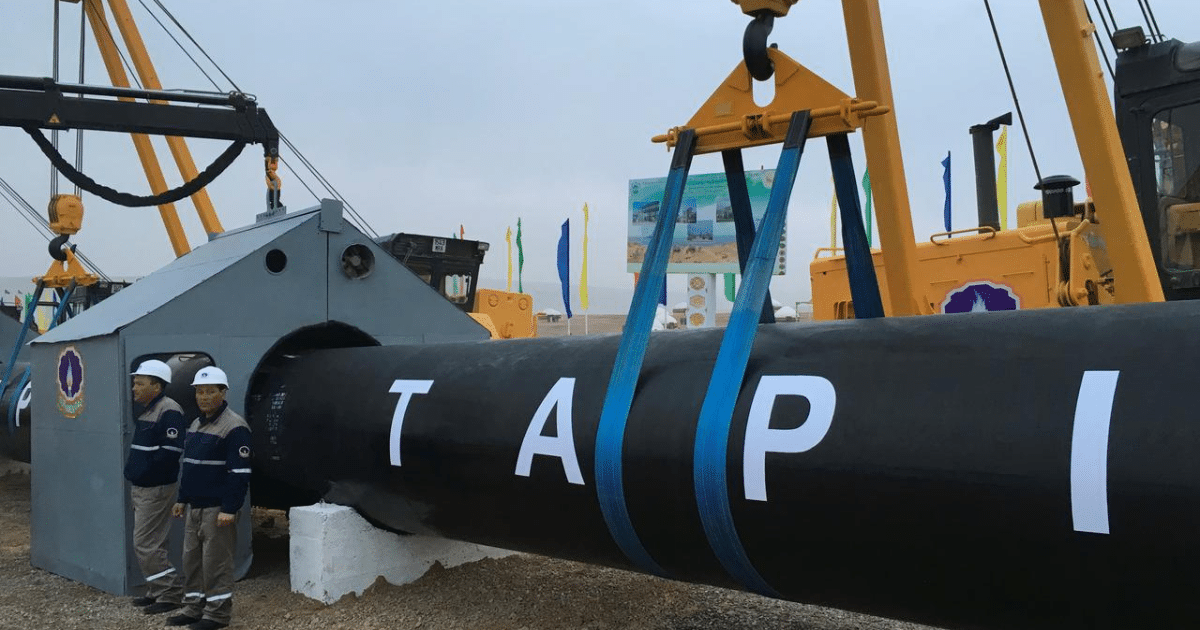





Pakistan and Turkmenistan agree to fast-track gas pipeline project involving Afghanistan and Indiahttps://t.co/VMk0KUeQxk
Pakistan and Turkmenistan agreed on Wednesday to fast-track a major pipeline project that will allow the Central Asian state to supply natural gas to… pic.twitter.com/5ja2XoQA0g
— Ariana News (@ArianaNews_) July 26, 2024
Pakistan’s long pursuit of Turkmen gas is gaining momentum. The Trans-Afghanistan Gas Pipeline, or TAPI, was first planned in the 1990s to bring gas from Turkmenistan’s Galkynysh field to South Asia. The project stalled for decades due to conflict, funding gaps, and regional instability. Now Islamabad and Ashgabat are pushing to revive it. In April 2025, Planning Minister Ahsan Iqbal met Turkmen President Serdar Berdimuhamedov and reaffirmed Pakistan’s commitment. He called the pipeline a transformative step for the region.
Turkmenistan, Pakistan agree to speed up TAPI gas pipeline projecthttps://t.co/D9L7HHn7BW
Turkmenistan and Pakistan have pledged to accelerate work on the long-delayed Turkmenistan–Afghanistan–Pakistan–India (TAPI) gas pipeline, a multi-billion-dollar project seen as critical… pic.twitter.com/I8sTL3wjh5
— Ariana News (@ArianaNews_) August 13, 2025
Turkmenistan and Pakistan have pledged to speed up the long-delayed TAPI gas pipeline. The project is crucial for regional energy security and economic integration. In Islamabad, Turkmen Ambassador Atadjan Movlamov met Pakistan’s Finance Minister Muhammad Aurangzeb. They discussed fast-tracking implementation, boosting bilateral trade, and promoting investment and joint ventures. Both sides stressed that completing TAPI on time would bring long-term socio-economic benefits. It would strengthen regional connectivity and ensure a stable energy supply for South Asia. For Turkmenistan, it provides a strategic export route. Turkmenistan invited Pakistan to its upcoming Investment Forum in Ashgabat, highlighting high-level engagement and Pakistan’s strategic role as a transit hub. These efforts complement TAPI and reflect a wider strategy to deepen regional energy cooperation, secure stable supplies, and boost transnational trade connectivity.
Source: ISGS
The pipeline is expected to deliver 33 billion cubic meters of gas per year. Pakistan and India will each receive 47.5 percent, while Afghanistan will get 5 percent. Pakistani officials stress that the project strengthens energy security and regional influence. They plan to route the gas to the Arabian Sea via new ports. Gwadar is seen as a strategic outlet connecting pipelines to global shipping routes. TAPI is envisioned as part of Pakistan’s broader trade network. Linking it with CPEC could attract investment, secure energy supply, and position Pakistan as a Central Asia–Indian Ocean bridge.
This renewed momentum shows changing geopolitics. Afghanistan’s new regime supported the project, and Turkmenistan inaugurated a TAPI section at the Turkmen-Afghan border in September 2024. In early 2025 that Afghans had welded 3 km of pipeline in Herat and were preparing more sections. Islamabad is fully backing these efforts. Pakistan’s planning ministry called the project beneficial for all countries and promised to accelerate its completion. Officials also stressed parallel infrastructure talks, including boosting bilateral trade toward a $4 billion target and improving transport links with Turkmenistan. These moves show that energy and economic diplomacy are closely linked.
You May Like To Read: Is the Global South Rising? Pakistan’s Leadership Role in the Shift
Pakistan’s Regional Energy Strategy
The TAPI gas pipeline holds major geopolitical and economic importance. It offers South and Central Asia a path to integration, energy security, and growth. For Pakistan, it promises relief from energy shortages, lower costs, and stronger industrial development. For Turkmenistan, it opens access to new export markets. Yet, security issues in Afghanistan and wider geopolitical hurdles remain serious challenges. Pakistan has shown strong political will through diplomacy, risk management, and international cooperation. The recent Pakistan-Turkmenistan agreement highlights a shared strategic vision. TAPI stands not only as an energy project but also as a symbol of stability, connectivity, and prosperity in the region.
Pakistan and Turkmenistan agree to fast-track gas pipeline project involving Afghanistan and Indiahttps://t.co/VMk0KUeQxk
Pakistan and Turkmenistan agreed on Wednesday to fast-track a major pipeline project that will allow the Central Asian state to supply natural gas to… pic.twitter.com/5ja2XoQA0g
— Ariana News (@ArianaNews_) July 26, 2024
Pakistan views TAPI as part of a broader energy strategy. The country has revived its 2009 Gas Sales Purchase Agreement with Iran, known as the “Peace Pipeline,” which had stalled under sanctions. Negotiations with Iran face legal and diplomatic challenges, but they show Islamabad’s aim to diversify gas sources. Within the ECO framework, Pakistan seeks to integrate these pipelines into regional cooperation. Even the Turkmen ambassador recently praised Pakistan as a “vital transit hub” for energy and trade in ECO.
Pakistan’s Dual-Pipeline Energy Strategy
Pakistan’s energy strategy is evolving through a dual approach linking the Iran-Pakistan Gas Pipeline (IPGP) and the Turkmenistan-Afghanistan-Pakistan-India (TAPI) pipeline. The IPGP offers a direct and cost-effective supply from Iran, but U.S. sanctions and potential $18 billion penalties make its completion legally and diplomatically complex. Meanwhile, TAPI provides a regional alternative, connecting Turkmenistan’s gas to Pakistan and India. It strengthens energy security and promotes Central Asian cooperation. Together, these pipelines show Pakistan’s drive to diversify energy sources, manage geopolitical pressures, and secure a stable, long-term energy future.
Challenges and Strategic Stakes for TAPI
Realpolitik cannot be ignored. India’s future role in TAPI is uncertain. Afghanistan’s security situation remains fragile. External powers are watching the pipeline closely. Russia, for example, is reportedly interested in linking TAPI to other Central Asian routes to reach South Asia. In response, Pakistani leaders emphasize the pipeline’s socio-economic benefits. A Turkmen official noted that completing TAPI would provide long-term gains and create thousands of jobs.
Conclusion
Pakistan’s Turkmen gas diplomacy turns an old pipeline plan into a modern strategy. By advancing TAPI and exploring parallel options with Iran, Pakistan addresses urgent domestic gas shortages. The country also strengthens its position as an energy transit corridor. Analysts note that Pakistan’s geography makes it a natural bridge between Turkmenistan’s resources and South Asian markets. Diplomatically and economically, Islamabad is converting TAPI from a stalled project into a driver of regional integration and economic security.
You May Like To Read: Rethinking Strategic Depth: From Kabul to Gwadar